

The Private Jet Routes Having a Moment
In 2026, private jet travel increasingly connects travellers to destinations beyond the limits of commercial aviation.
If the years gone by were about flying private more often, 2026 is about flying smarter. With next-gen aircraft pushing longer ranges, quieter cabins and faster point-to-point connections, private aviation is unlocking routes that were once inconvenient, indirect or simply off the map.
What follows is an overview of the newest private jet routes taking shape.

Gateway to Antarctica (Punta Arenas, Chile)
Private aviation is playing an increasingly pivotal role in how travellers access Antarctica, the world’s most remote and tightly regulated frontier. Punta Arenas has emerged as a critical launch point, with private jets enabling direct, precisely timed arrivals that align with narrow Antarctic weather windows and highly coordinated expedition schedules.
Unlike commercial travel, which often requires multiple connections and extended waiting periods, private flights into southern Chile significantly reduce transit time and logistical complexity. This efficiency is particularly valuable for luxury expedition operators, research teams and high-net-worth travellers, for whom flexibility, safety and schedule control are paramount.

The Kimberley, Australia (Perth to Remote Airstrips)
Vast distances and minimal infrastructure have long defined travel across Western Australia’s Kimberley region. Private aviation now provides direct connectivity from Perth to remote airstrips servicing wilderness lodges, cattle stations and expedition camps, which significantly shortens travel times across this expansive terrain.
This mode of access reduces the need for extended overland journeys through rugged landscapes, while allowing itineraries to be planned around seasonal conditions and operational constraints. For travellers seeking immersive experiences in one of Australia’s last true wildernesses, private aviation offers efficiency in a region where conventional transport options are limited.

Galápagos Islands (Mainland Ecuador to Baltra)
Strict environmental controls and limited visitor capacity define access to the Galápagos, making arrival logistics as important as the experience itself. Private aviation has become an increasingly effective means of reaching the islands from mainland Ecuador. This allows arrivals to be precisely coordinated with conservation protocols and permitted visitor windows.
By reducing reliance on fixed commercial schedules, private flights enable smoother transitions into the archipelago while minimising congestion at key entry points. This controlled access is particularly valued by expedition operators and high-end travellers seeking a structured, low-impact approach to one of the world’s most ecologically sensitive destinations.
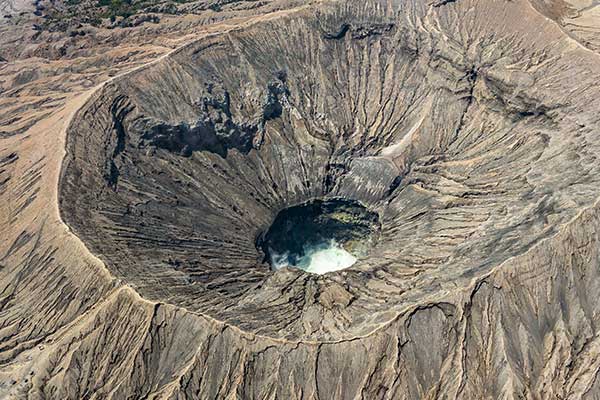
Icelandic volcano rings
Iceland’s volcanic landscapes present a uniquely dynamic travel environment, where access is dictated as much by geological activity as by weather and terrain. Private aviation has become an essential enabler in navigating these conditions, allowing travellers to reach Reykjavík and onward regional airfields with precision and flexibility.
By bypassing rigid commercial schedules, private flights make it possible to access remote lava fields, geothermal zones and monitoring sites with minimal overland travel. This capability is particularly valuable for scientific teams, media operations and high-end experiential travellers.