
the art of rain
After a particularly relentless summer, relief can come through art—paintings, photographs or installations that capture the beauty and mood of the rains. Rain in art is not uniformly sombre. While some paintings evoke melancholy and introspection, many others are rich with warmth, atmosphere and emotion, embracing the viewer and drawing them deeply into the scene.
For artists, rain has never been merely weather. It is mood, memory and metaphor—a symbol of love, loss, renewal or longing. Across centuries and cultures, artists have sought to capture its fleeting presence, translating cloudbursts, downpours and mist into visual poetry. In doing so, they reveal not only the many forms of rain, but also the emotions it stirs within us.
rain as life
For Indian artists, rain has never been just weather—it is a character in its own right. The idea can be traced back to the Sanskrit classic Meghdoota, where the poet Kalidasa imagines a lovesick celestial being sending a message to his distant beloved through a passing cloud. The cloud becomes a messenger of longing, setting the tone for centuries of artistic expression.
By the 16th and 17th centuries, rain had become a central motif in Rajput and Pahari miniature paintings. In the celebrated Ragamala series, particularly Megha Raga and Megh Malhar, monsoon skies are transformed into dramatic theatres of emotion. Indigo clouds swirl across the horizon, lightning splits the sky and nature seems charged with anticipation.
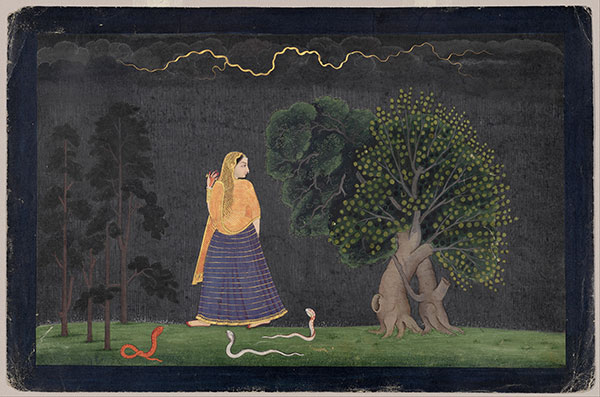
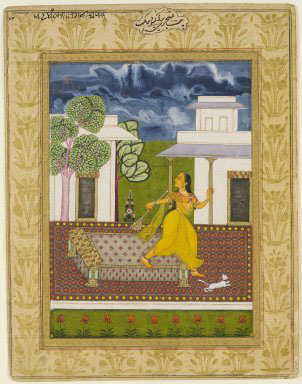
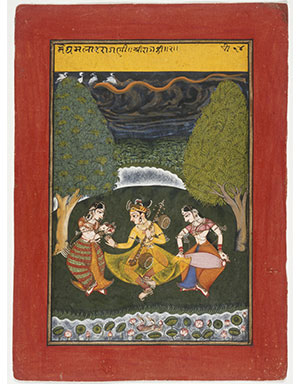
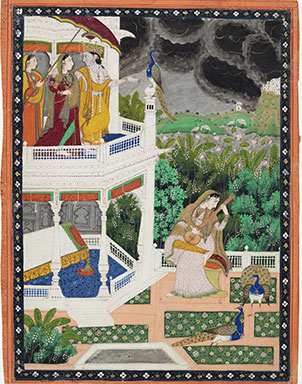
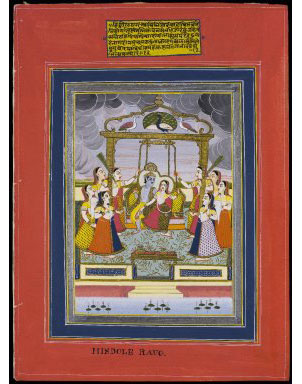
What is striking is that artists rarely painted rain realistically. Instead, it appears as delicate white streaks, creating a mood rather than recording a weather event. Rain is especially linked to shringara, the aesthetic of romance. The fearless Abhisarika Nayika braves storms to meet her lover, while depictions of Radha and Krishna sheltering together beneath gathering monsoon clouds turn rain into an active participant in divine love.
Rain also had the power to humanise royalty. A celebrated late-17th-century miniature from the Mewar court portrays Prince Amar Singh II walking barefoot beneath an umbrella during a rain shower. The image is striking because it departs from the rigid ceremonial conventions typically associated with royal portraiture.
Centuries later, artists would continue exploring rain not through palaces but through ordinary lives. Nandalal Bose, one of the pioneers of modern Indian art, found poetry in everyday monsoon scenes. In works such as Four Figures with Umbrellas during Monsoon, rain becomes democratic—a shared experience that connects strangers beneath grey skies.
rain as impression
While Indian artists embraced rain early as a powerful emotional symbol, Western painters were slower to make it a central subject. For centuries, rain posed a practical problem: oil painting was designed to capture permanence and form, while rain is fleeting, elusive and constantly changing.
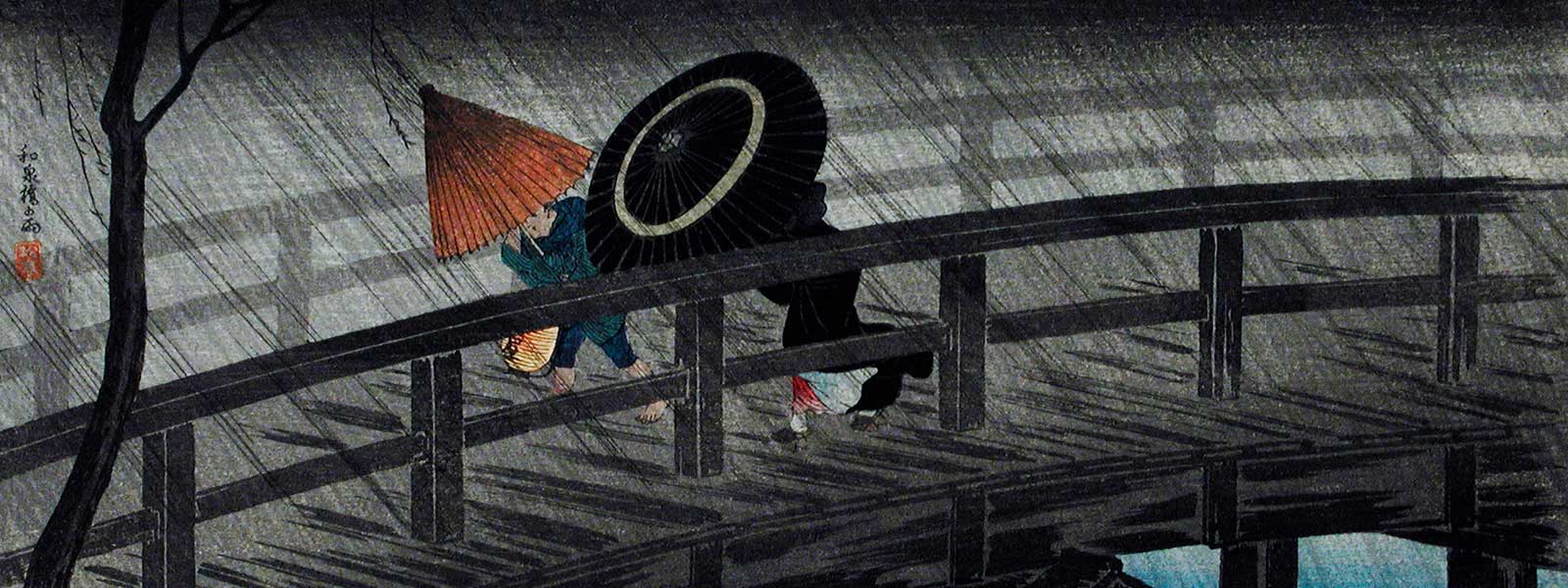
Everything changed in the late 19th century with the arrival of Impressionism. Artists became less interested in precise detail and more fascinated by atmosphere, light and sensation. A major catalyst was Japanese art. The woodblock prints of Utagawa Hiroshige introduced a striking new visual language, using sharp diagonal lines to depict rain with energy and movement. His famous Sudden Shower over Shin-Ōhashi Bridge left a deep impression on European artists.
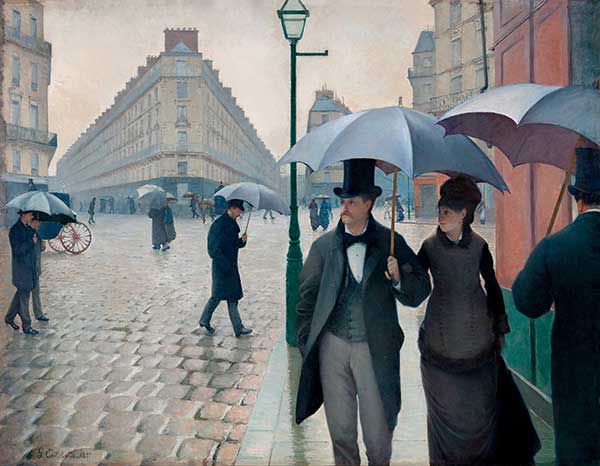
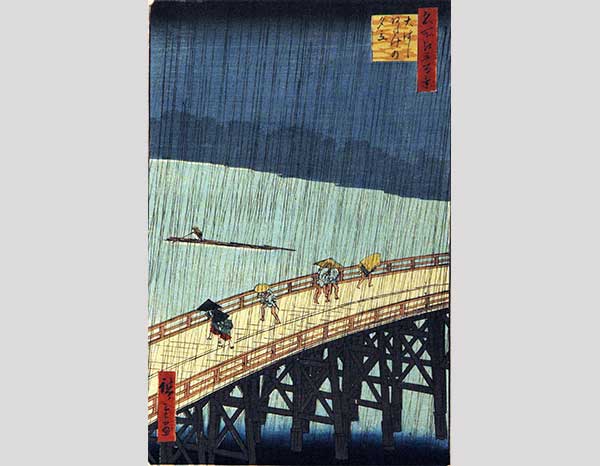
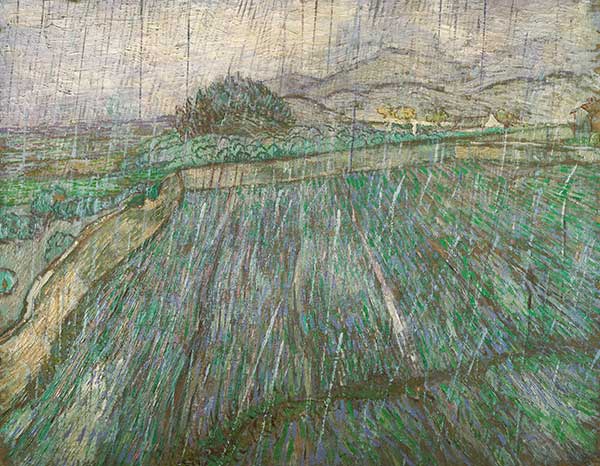
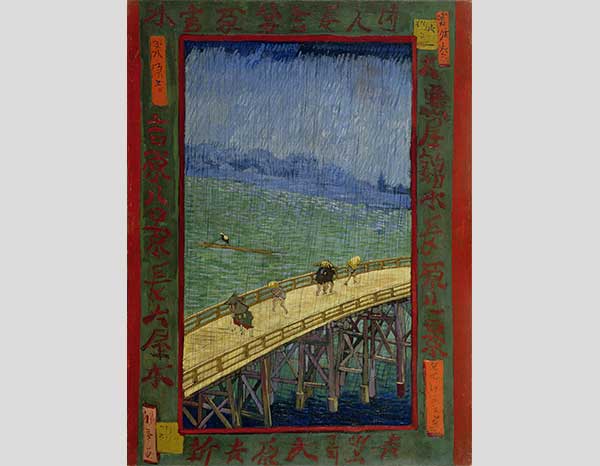
Among them was Vincent van Gogh, who admired Hiroshige so much that he recreated the print as Bridge in the Rain, translating its dramatic geometry into oil paint. Meanwhile, Gustave Caillebotte took a subtler approach in Paris Street; Rainy Day. There are no visible raindrops, yet the wet pavements, muted light and umbrellas make rain unmistakably present. More than a weather scene, it becomes a portrait of modern city life—where people share the same street but remain emotionally apart. Rain, here, is as much a state of mind as a natural phenomenon.
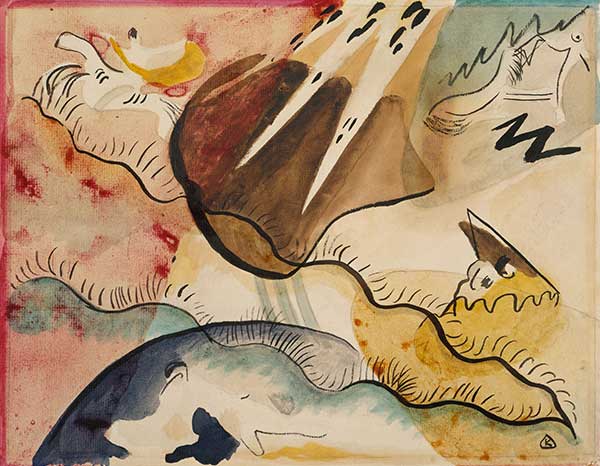
As art moved into the 20th century, rain became increasingly abstract. For modernists, weather no longer needed to resemble itself. What mattered was the feeling it produced. In Wassily Kandinsky’s Rain (1911), precipitation dissolves into energetic diagonals and bursts of colour. The storm exists not in the sky but in the psyche. Rain becomes a visual language for inner turbulence, spiritual searching, and emotional intensity.
in photos
Photography introduced a different challenge. Painters could interpret rain; photographers had to confront its physical reality. Early cameras struggled with moving water, often reducing rainfall to indistinct blurs. Yet some photographers turned these limitations into artistic opportunities.
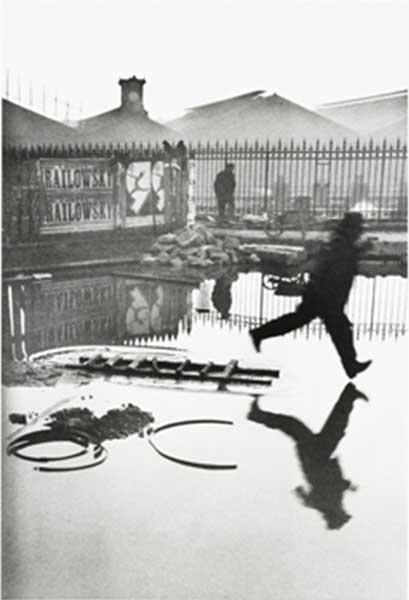
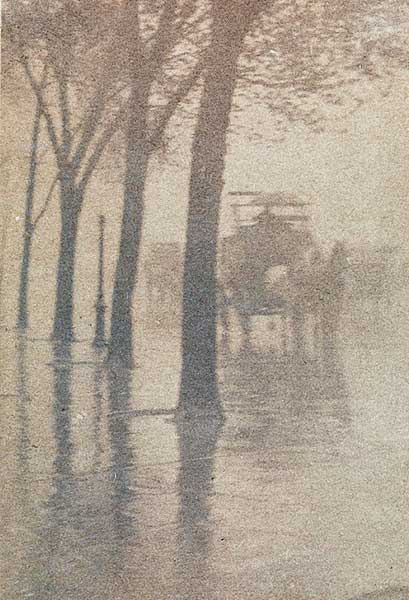
Alfred Stieglitz used rain to soften the industrial harshness of urban environments, transforming city streets into atmospheric dreamscapes. Henri Cartier-Bresson famously exploited the reflective aftermath of rain in Behind the Gare Saint-Lazare, where a man leaps across a puddle at the exact instant before impact. The puddle acts like a mirror, doubling the image, and freezing time.
In Asia, Fan Ho mastered rain-drenched cityscapes where umbrellas become graphic forms drifting through mist and shadow. His photographs reveal how rain can simplify a crowded city into pure geometry and light.
contemporary art
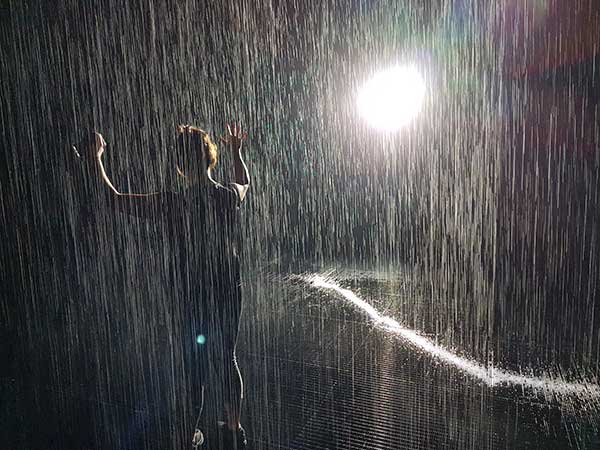
Contemporary artists have pushed the relationship between art and rain even further. Instead of depicting rain, they invite audiences to experience it. The most iconic example is Rain Room. Visitors walk through a seemingly continuous downpour while sophisticated sensors stop the rain wherever they stand. The sensation is uncanny: one moves through a storm yet remains perfectly dry. Other contemporary artists have gone in the opposite direction, surrendering control entirely. Canvases are left outdoors during storms, allowing raindrops to dilute pigments and shape compositions. Here, weather itself becomes the artist.
the eternal muse
From lightning-filled skies of Rajput miniatures to the reflective boulevards of Paris and the immersive digital environments of contemporary museums, rain has remained one of art’s most enduring subjects precisely because it resists capture. It is transient yet transformative. It obscures and reveals. It carries memories, amplifies emotions and alters landscapes in an instant.